Building a Home First Aid Kit That Is Actually Useful
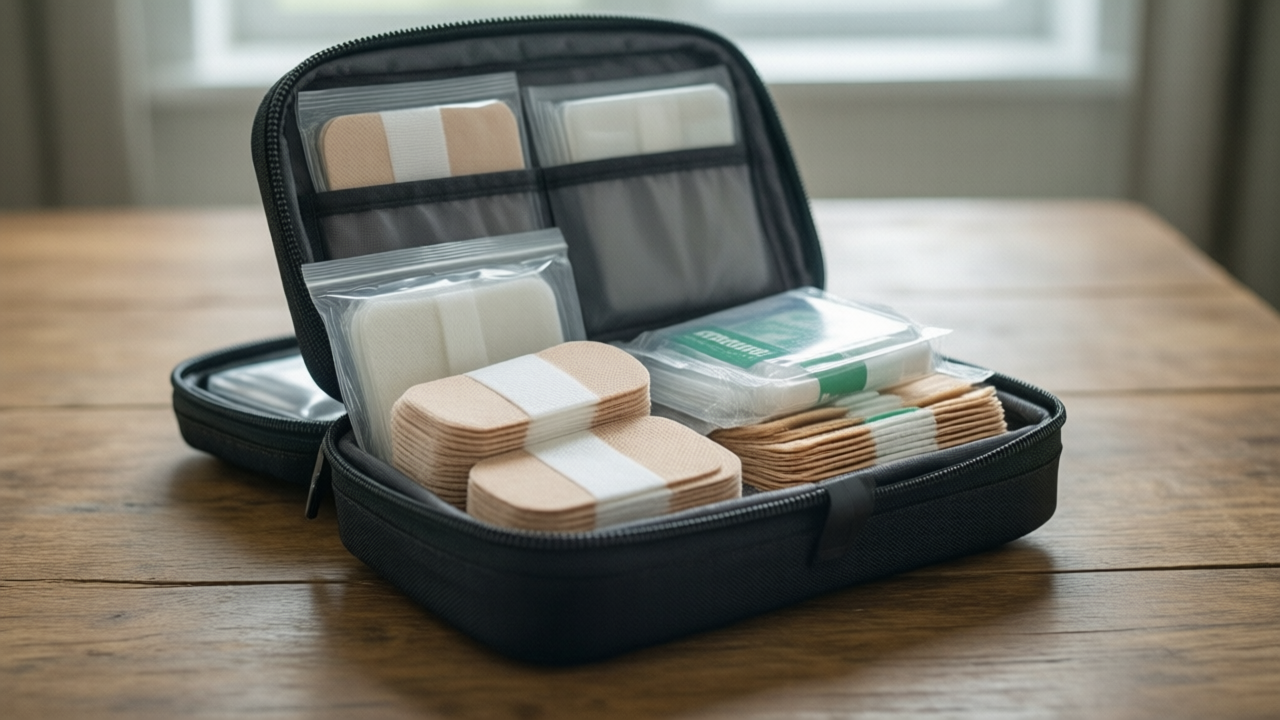
Most household first aid kits are purchased once and never reviewed, which means they are often missing the items most commonly needed and full of items that expired years ago.
The basics worth having
Wound care, which is the majority of actual use:
- Adhesive bandages in several sizes
- Sterile gauze pads and rolled gauze
- Adhesive tape
- Antiseptic wipes
- Antibiotic ointment
- Elastic bandage for wrapping and support
- Tweezers for splinters
- Scissors
- Disposable gloves
Medications, checked against your household's needs and any clinician guidance:
- Pain and fever reducers appropriate for the ages in your home
- Antihistamine
- Hydrocortisone cream
- Any personal prescription medications that would be needed urgently, such as rescue inhalers or epinephrine auto-injectors, stored per instructions
Tools and reference:
- Digital thermometer
- Instant cold packs
- Emergency contact numbers written down, including poison control
- A basic first aid guide
In the United States, Poison Control is reachable at 1-800-222-1222, and it is worth having that number visible rather than looked up during an emergency.
Review it twice a year
Attach the review to something you already do, such as changing smoke detector batteries.
- Discard expired medications and replace them.
- Restock anything used, since kits are usually depleted in exactly the categories used most.
- Check that adhesive items have not dried out.
- Confirm the kit still matches the household, since needs change as children grow.
Where to keep it
One main kit in an accessible location that everyone in the household knows, not buried in a closet. A smaller kit in each vehicle is worthwhile, recognizing that heat degrades medications faster in a car, so those need more frequent review.
Ensure the location is known to visitors and caregivers, and that it is reachable by adults but not by small children, particularly for anything containing medication.
Basic wound care
For minor cuts and scrapes: wash your hands, apply gentle pressure with clean gauze to stop bleeding, clean the wound with running water, apply ointment if appropriate, and cover it. Change the dressing when it becomes wet or dirty.
Watch for signs of infection over the following days: increasing redness spreading from the wound, warmth, swelling, worsening pain, pus, or fever. These warrant medical attention.
When to seek professional care
A kit handles minor injuries. Some situations require professional evaluation, including:
- Bleeding that does not stop after sustained direct pressure
- Deep wounds, wounds that gape, or wounds that may need closure
- Puncture wounds, animal bites, or human bites
- Wounds containing debris that will not wash out
- Burns that are large, deep, or on the face, hands, feet, or genitals
- Suspected fractures, or an injury with obvious deformity
- Head injuries with loss of consciousness, confusion, repeated vomiting, or worsening headache
- Any injury where tetanus protection may not be current
Call emergency services immediately for
- Difficulty breathing or shortness of breath
- Chest pain or pressure
- Signs of stroke, including facial drooping, arm weakness, or speech difficulty
- Severe bleeding that cannot be controlled
- Loss of consciousness
- Signs of a severe allergic reaction, including swelling of the face or throat, difficulty breathing, or widespread hives
- Suspected poisoning or overdose
Consider training
A first aid and CPR course provides something a kit cannot. Skills such as CPR, using an automated external defibrillator, and responding to choking are time-critical, and reading about them is not equivalent to practicing them. Courses are widely available, short, and among the more valuable ways to spend an afternoon.
This article is general safety information and not medical advice, and it is not a substitute for professional emergency care or formal first aid training. When in doubt about an injury, seek professional medical attention.
Article Was Generated By AI.